

Story
Behind the Screen: How Online Job Offers Are Luring Job Seekers into Forced Criminality.

Factbox
Date
October 16, 2026
In today’s technology driven world, looking for a job is as simple as logging onto social media or clicking a link in a messaging app. But behind the promise of high salaries and easy remote work lies a dark reality that is sweeping across Southeast Asia: Trafficking for Forced Criminality.
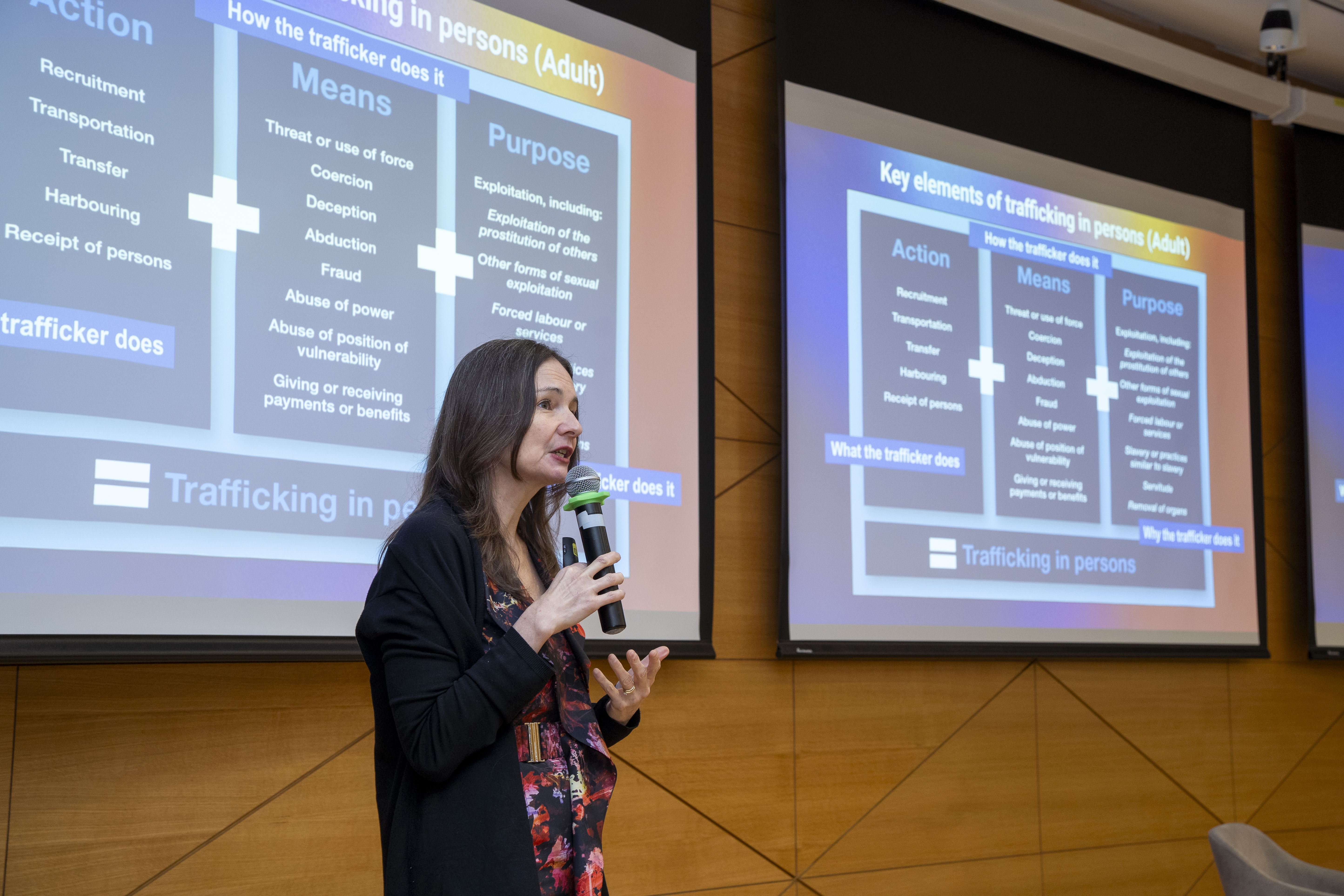
At a recent forum hosted by the United Nations Office on Drugs and Crime (UNODC) and the National Strategic Office of the Council for Anti-Trafficking in Persons and Anti-Smuggling of Migrants (NSO-MAPO), St@y Safe in Digital Space, experts from different industries came together to shed light on how modern job searches are being weaponised by criminal syndicates.
Here is what you need to know about this growing digital threat and how to protect yourself and your loved ones:
1. What Is Trafficking for Forced Criminality?
When most people think of human trafficking, they picture physical forced labor or sexual exploitation. However, a new pattern has emerged across countries like Cambodia, Myanmar, Laos, Thailand, and the Philippines. In trafficking for forced criminality, victims are lured with deceptive job offers—such as customer service, sales, or IT support—only to discover upon arrival that the job does not exist. Instead, they are held against their will and forced to execute online scams, phishing operations, and illegal gambling schemes under severe threats.
2. No One Is Immune
Why does this scheme work so effectively? Because criminal syndicates target something every job seeker needs: employment and financial security.
A common misconception is that only naive or uneducated individuals fall for these traps. In reality, victims include university graduates and even individuals holding advanced degrees like PhDs. Syndicates craft highly convincing recruitment posts on popular platforms including Facebook, LinkedIn, TikTok, Threads, and Telegram, promising perks like covered travel expenses, free lodging, and generous salaries.
3. How Traffickers Hold Control
Once a victim arrives at the destination, traffickers deploy complex physical and psychological control mechanisms to prevent them from leaving:
- Document Seizure: Confiscating passports and national identity cards.
- Debt Bondage: Inventing artificial debts for travel or visas that the victim must pay off.
- Isolation & Surveillance: Restricting phone use, monitoring movements, and keeping victims in guarded compounds.
- Fear & Manipulation: Exploiting fears of local police, deportation, or legal consequences, while weaponising shame to keep victims from reaching out to family.
Mainstream Social Media as the Hunting Ground
Online platforms serve as a multi-stage, highly systematic funnel that criminal syndicates weaponize to exploit job seekers at every step of their journey. Here is a detailed breakdown of how each phase operates:
- Recruitment: Syndicates start by posting polished job ads on popular channels like Facebook, Telegram, TikTok, Threads, and LinkedIn. These postings are designed to look like legitimate corporate hiring notices.
- Logistics & Coordination: Once a candidate shows interest, recruiters quickly move the conversation over to private, encrypted apps like WhatsApp or Telegram. By keeping their own identities hidden while orchestrating every detail of travel, scammers effectively lock candidates into the process before they even realise what is happening.
- Exploitation: Once victims step inside the compound, the trap springs shut. The promised career vanishes, and they are forced into running online scams. Traffickers compel them to build fake profiles on social media and dating apps to target unsuspecting people worldwide. Most commonly, they are forced to target their own friends and family first, weaponising personal trust to steal money.
How to Stay Safe: Digital Literacy Is Your Strongest Shield
Preventing cyber-trafficking starts with awareness and proactive verification. Here are key steps every job seeker and family should take:
- Verify Before You Apply: Always research the hiring company independently. Be skeptical of jobs advertised solely through personal social media accounts or Telegram groups with generic contact info.
- Watch for Red Flags: Unusually high pay for entry-level work, vague job descriptions, immediate overseas placement, or requests to pay processing fees are strong indicators of a scam.
- Talk About Digital Safety at Home: Digital literacy is not just for tech workers. It is essential for parents, youth, and students. Discussing online safety and red flags at home creates a vital safety net.
- Report Suspicious Job Ads: If you come across a deceptive job posting or suspect someone is being exploited, report the listing on the platform and contact local authorities immediately.
Safe Work Begins with Fair Recruitment
Legitimate employers do not charge job recruitment fees, demand your passport, or force you into unlawful work. By staying informed, verifying opportunities, and raising awareness about trafficking in the digital space, we can protect ourselves and our communities from falling into the trap of forced criminality.
Watch this video by UNODC: Scam Artist or Human Trafficking Victim? | Inside a Scam Farm
Join us. Act now. Reach out.
Gallery